
Arborvitae Trees for Sale
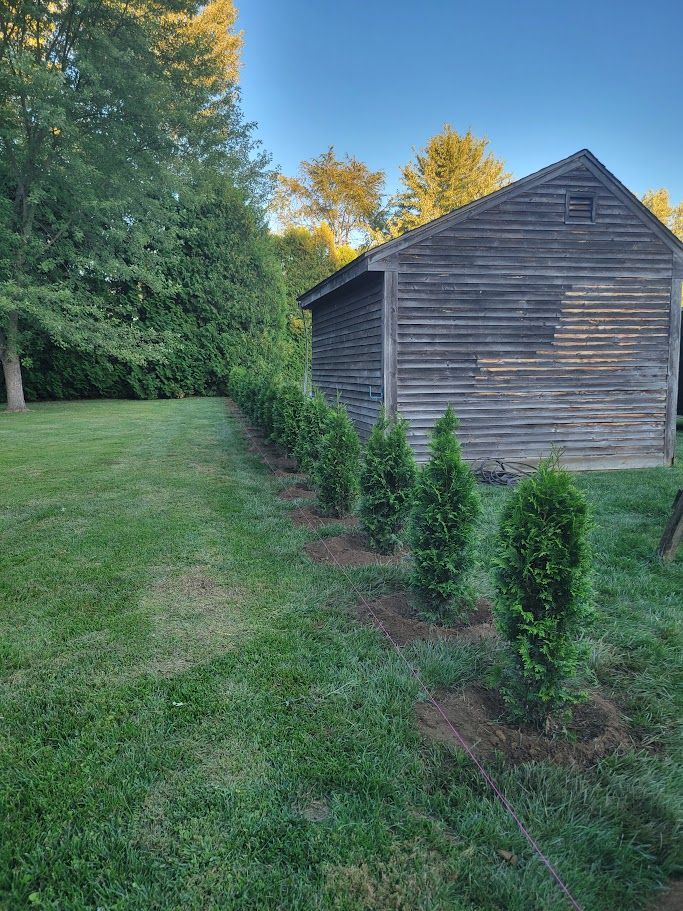
Arborvitaes are a New England classic and one of the simplest, most affordable ways to add lasting privacy without building a fence. At Farmer Clark’s, we stock three essential New England varieties, Green Giant, Junior Giant, and Emerald Green arborvitaes. We provide delivery right to your doorstep, and we also offer planting services.
What Our Customers Are Saying
Clark, was prompted and showed up when he said he would. He planted 10 arborvities for me where I asked. They look great and Clark was easy to talk too. No complaints , ill be grabbing more trees off him in the future. Easy transaction. Thank you
John
He is very knowledgeable and experienced in his field, and his passion is evident in everything he does. The quality of his work reflects his dedication and love for farming.
Kayla

Daniel

We had an outstanding experience with Farmer Clark’s Arborvitae business. He was extremely responsive, returning every phone call and text promptly, showed up exactly when he said he would, and was very easy to work with throughout the entire process. His pricing was extremely fair and reasonable, and the quality of work exceeded our expectations. He did a phenomenal job installing over 50 trees for us, and the results look fantastic. We couldn’t be happier and would highly recommend him to anyone looking for reliable, professional, and top‑quality work.
Joseph
I recently purchased arborvates from Farmer Clark and had an excellent experience. He was incredibly easy to work with and fair with pricing, especially when it came to the installation. I truly felt he was honest and professional throughout the process. I would highly recommend Farmer Clark to anyone looking for quality products and a trustworthy seller!
We recently had 25 Green Giant arborvitae trees planted in our backyard by Farmer Clark, and I couldn’t be happier with the experience. From start to finish, he took great care in placing each tree thoughtfully, making sure the spacing and layout were exactly what we wanted.
He worked efficiently and got the job done quickly without sacrificing quality. He was also very kind and easy to work with, really taking the time to listen to what I had in mind and making it happen.
The trees themselves are beautiful and clearly high quality. You can tell he takes pride in his work and the products he provides. I would absolutely recommend him to anyone looking for professional, reliable planting services.
Sheila
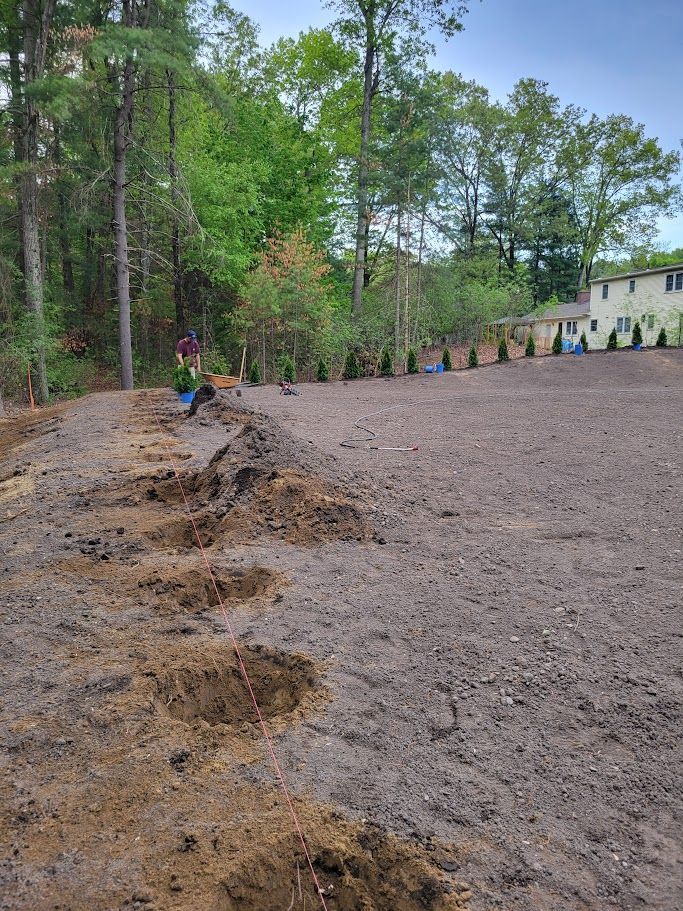
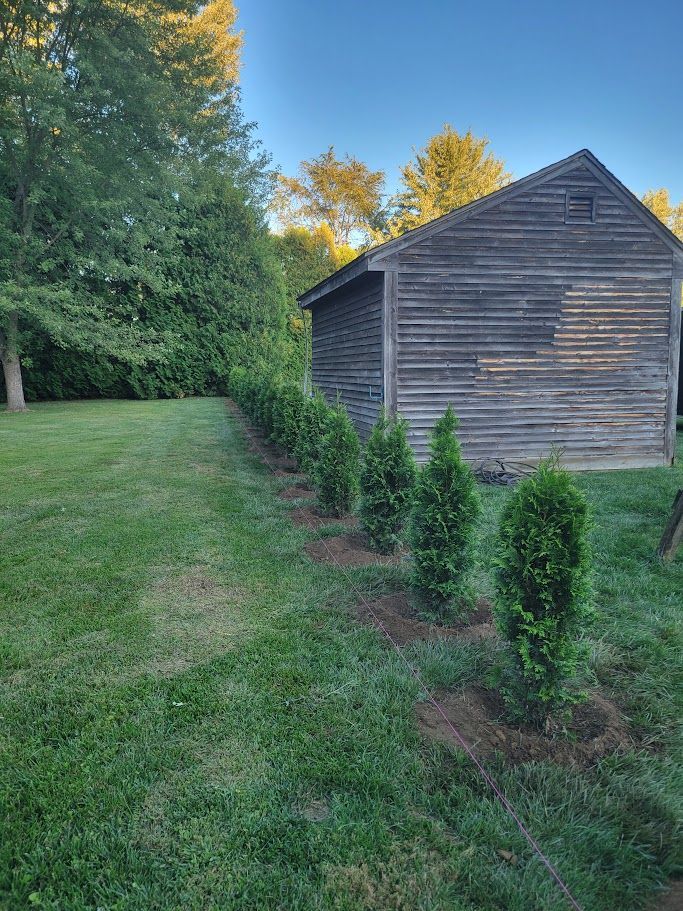
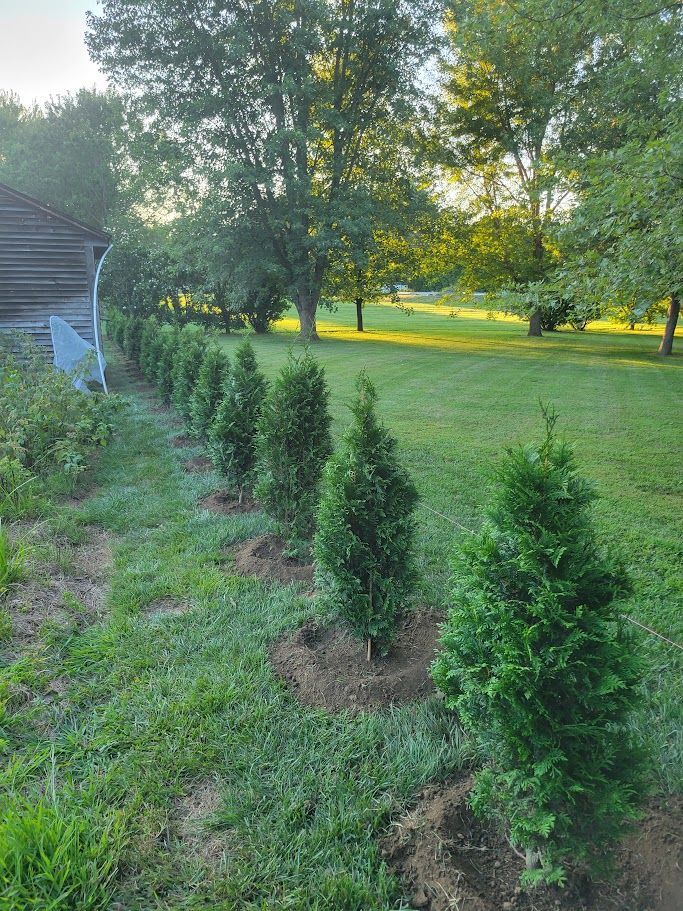
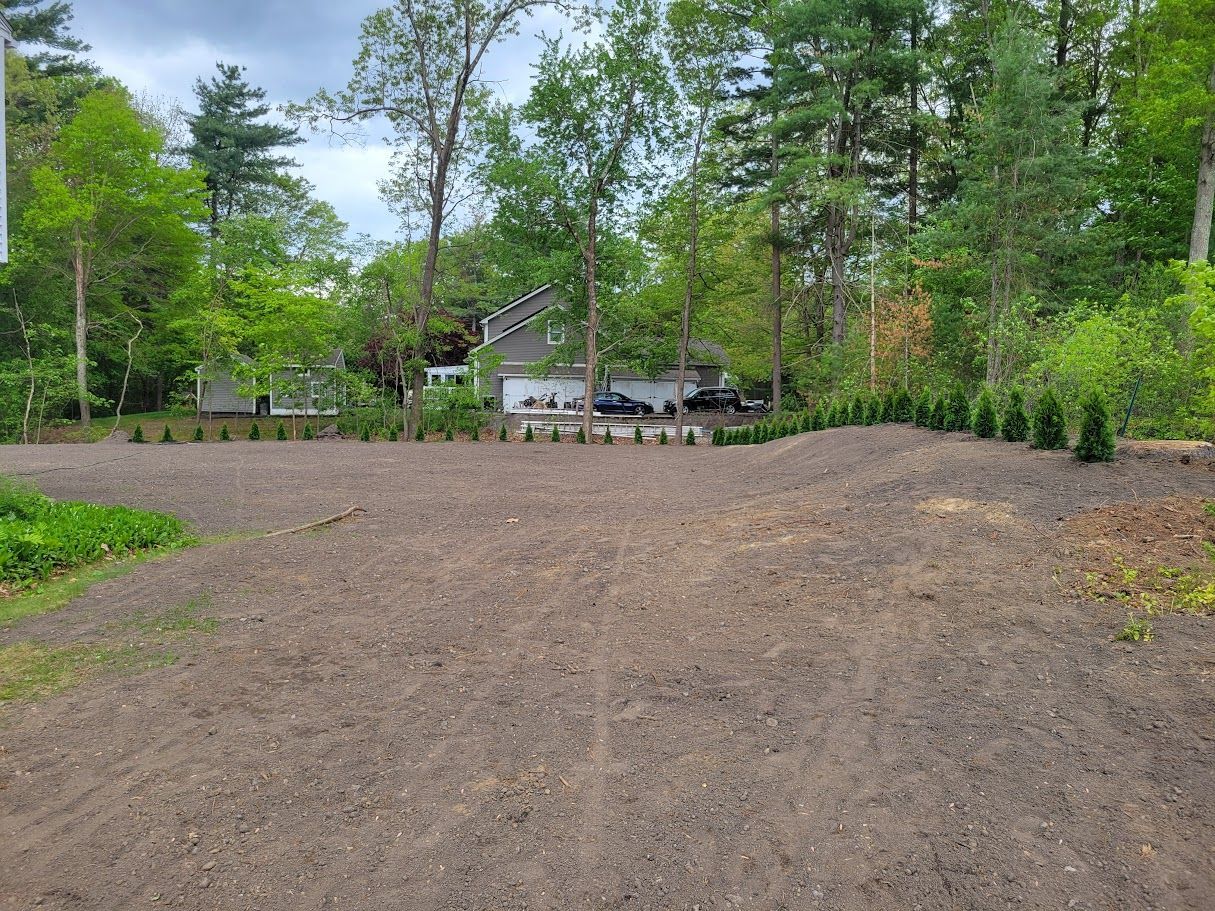
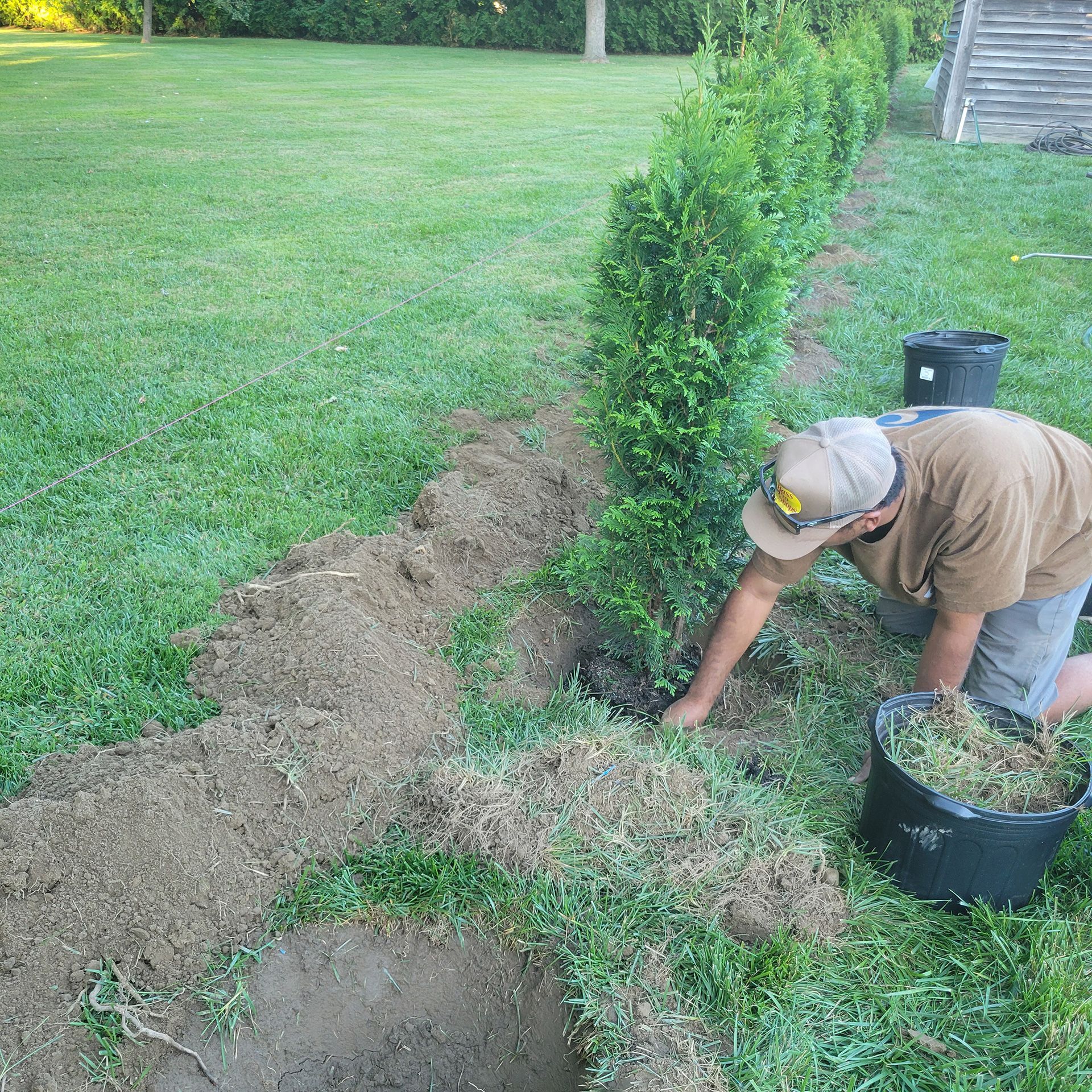
Planted by Farmer Clark
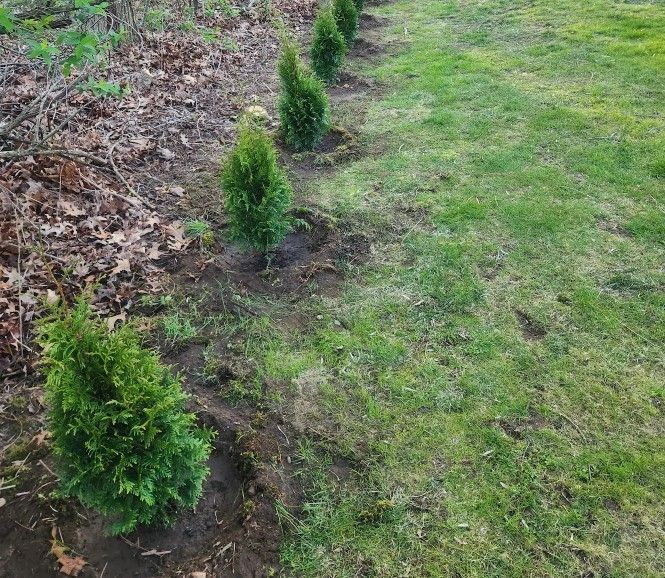
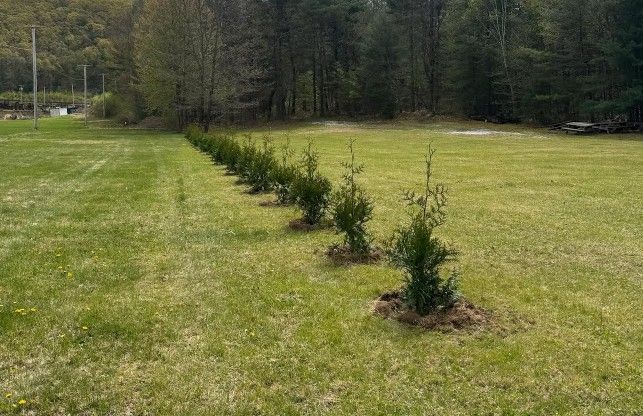
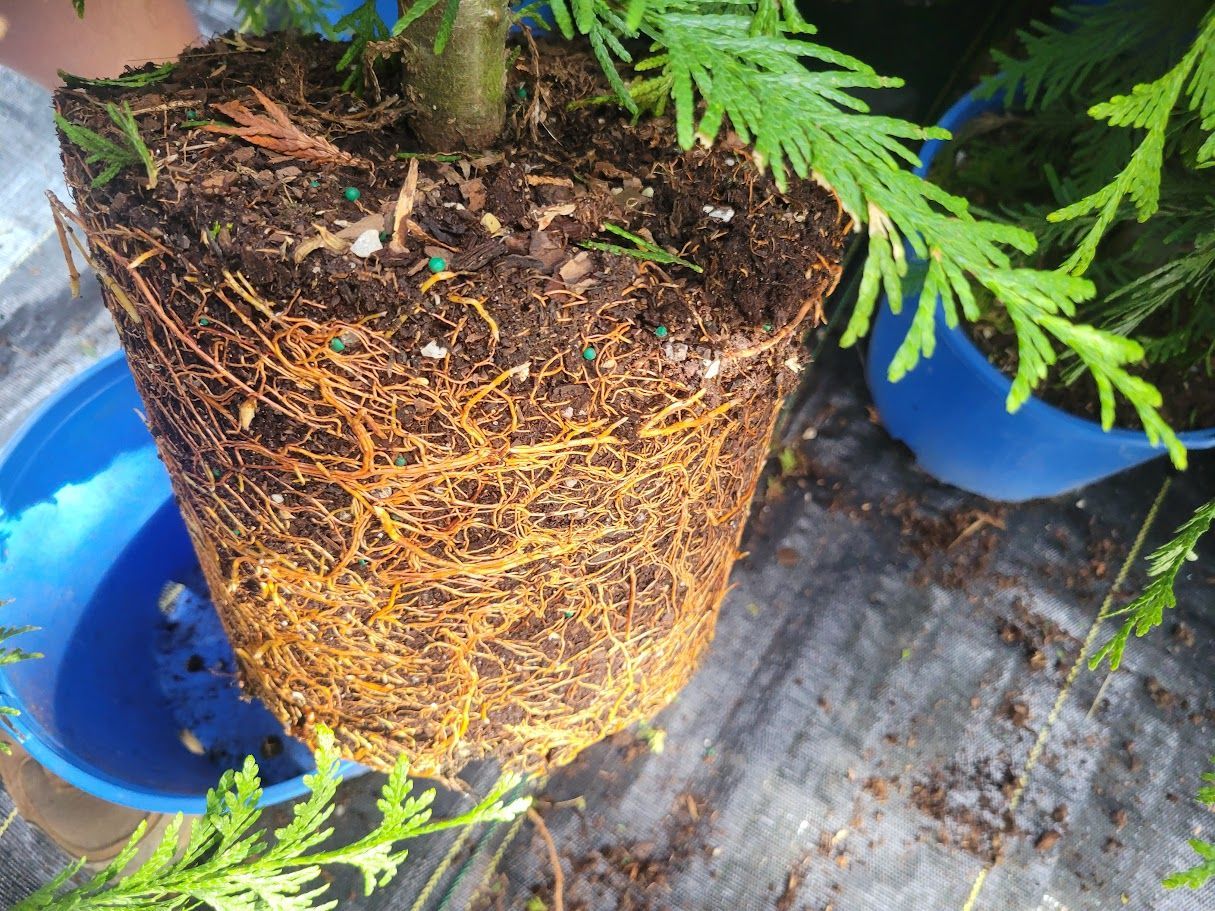
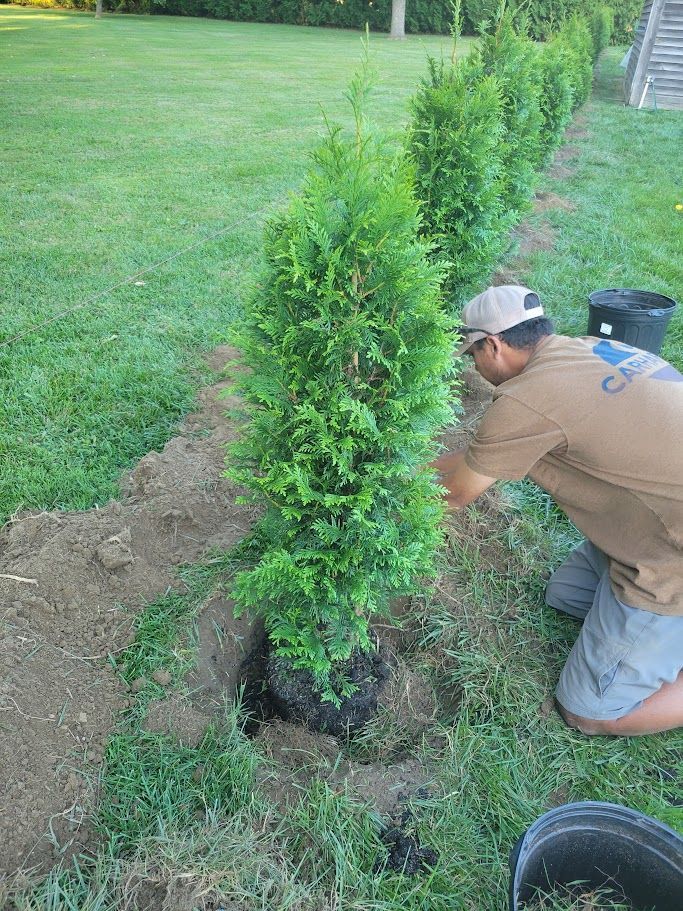
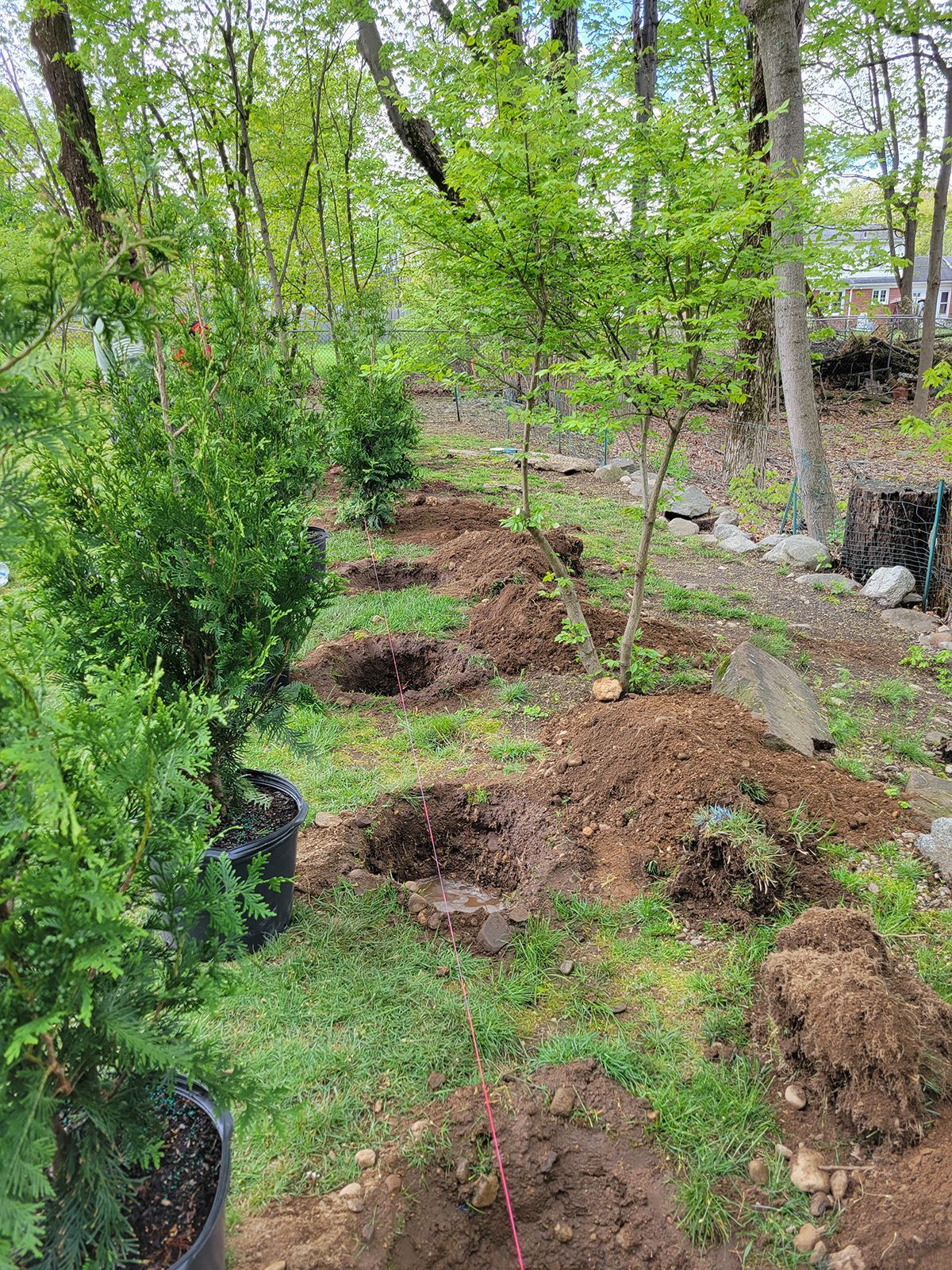
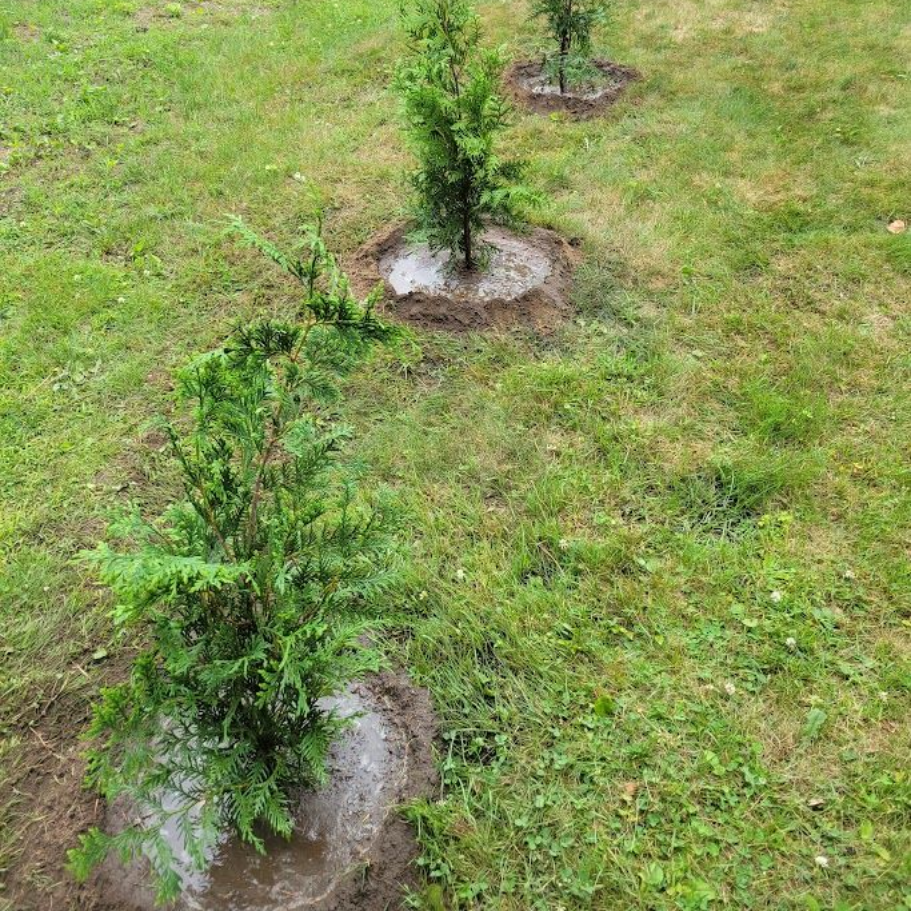
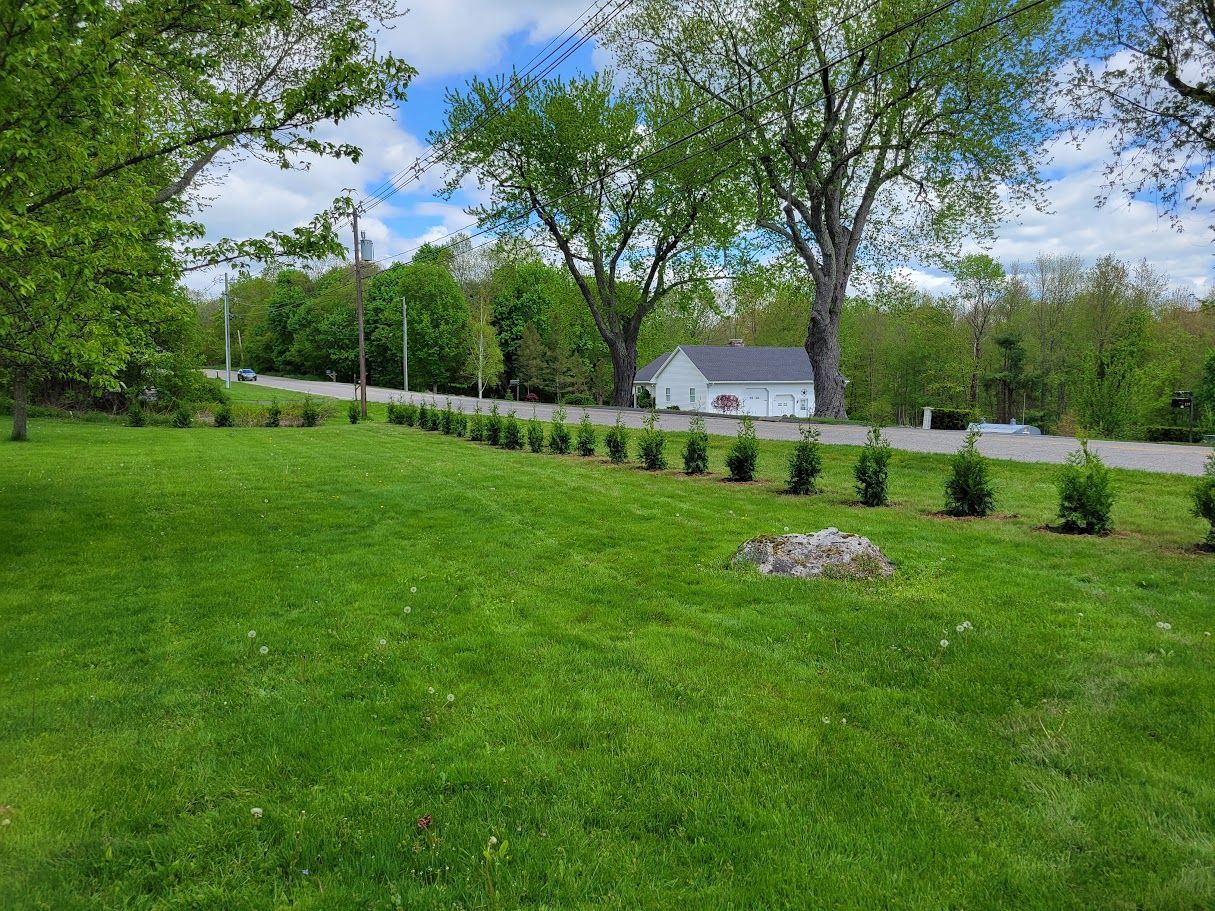
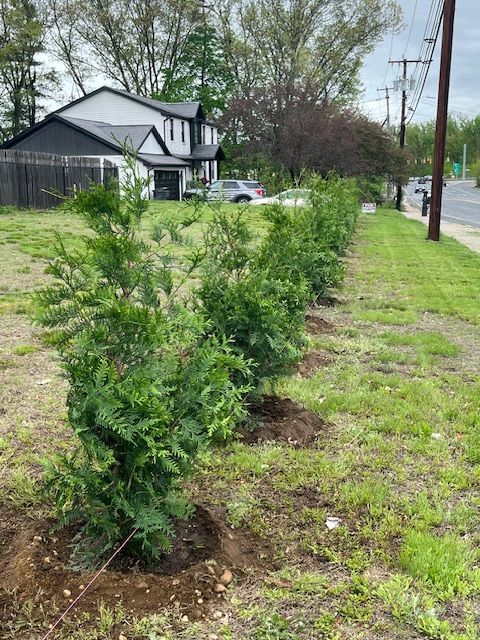
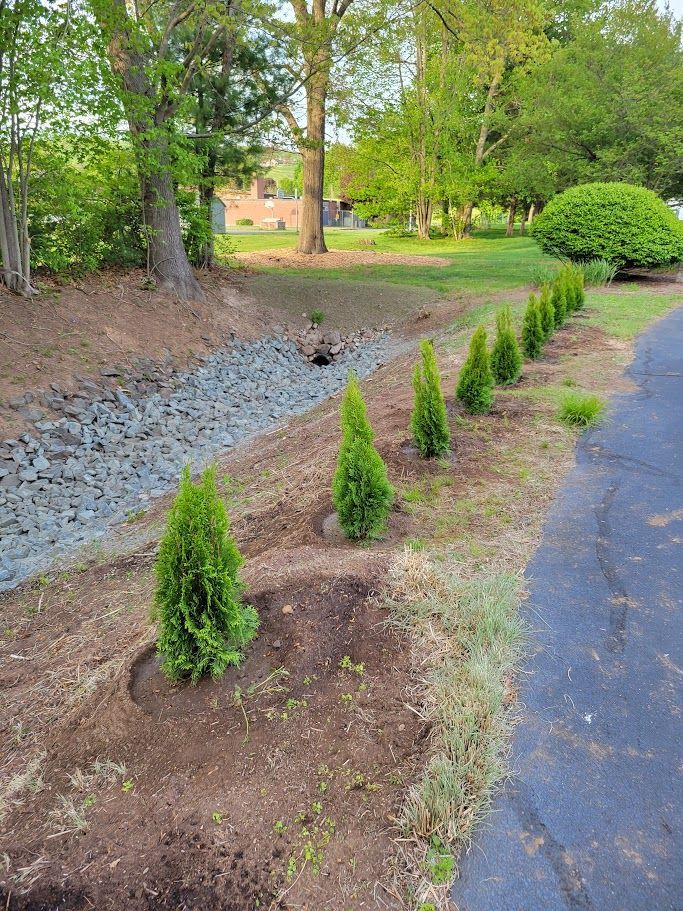
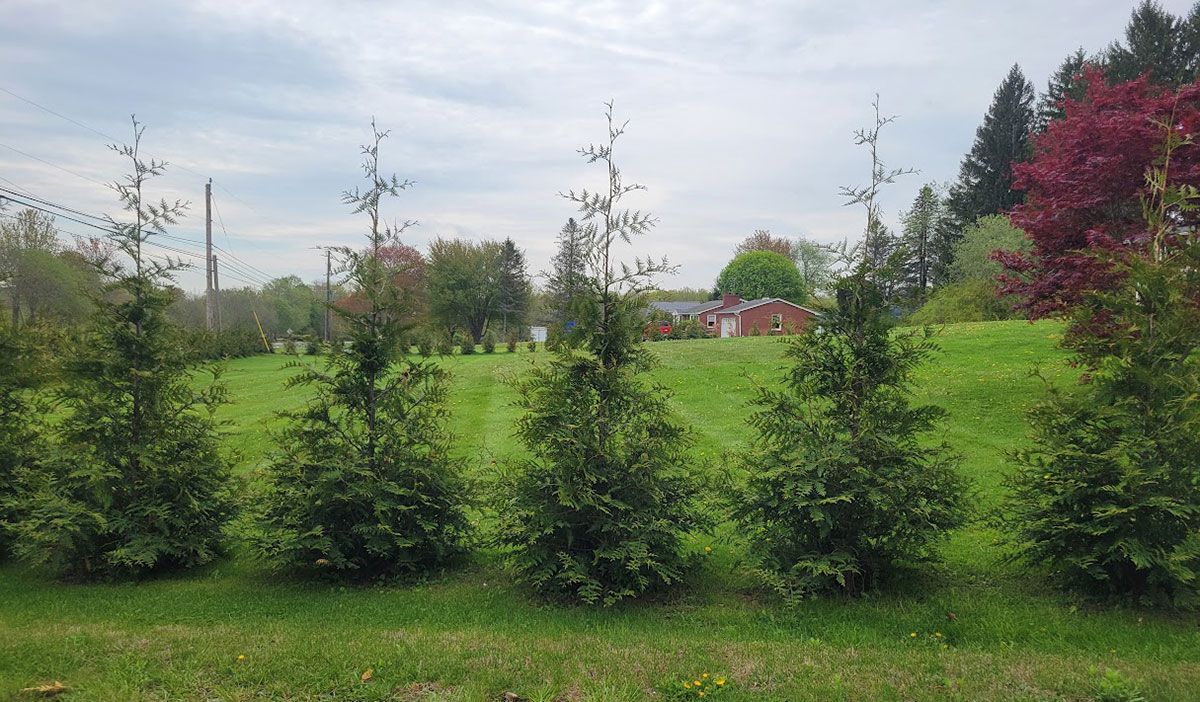
Take a look at some of Farmer Clark’s recent arborvitae installations and plantings across New England. From cozy backyards to long driveway borders, these projects show how Green Giant, Emerald Green, and Junior Giant arborvitaes can create instant structure, privacy, and year‑round green.
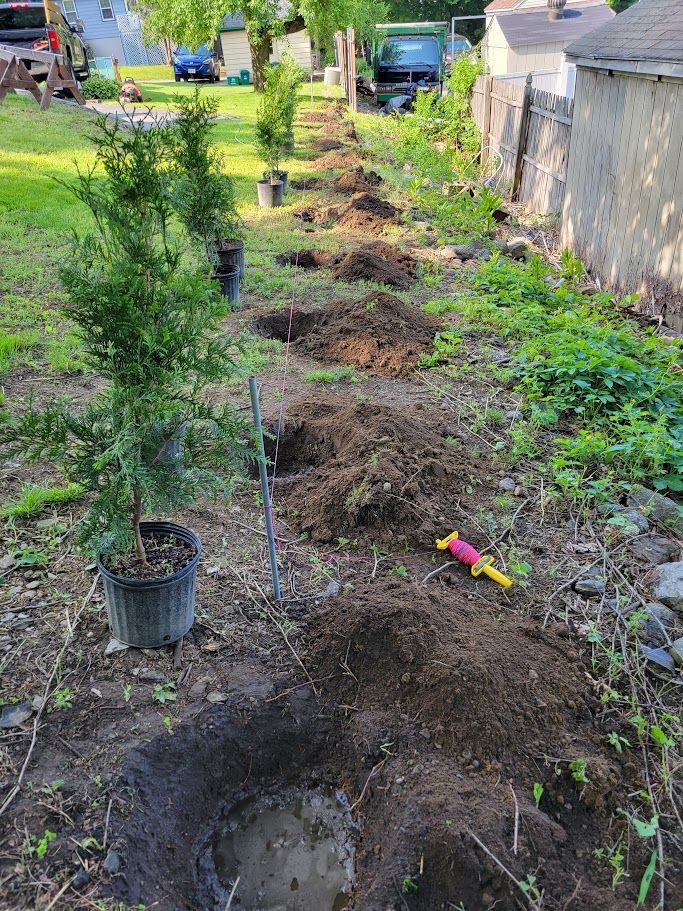
Planting Instructions
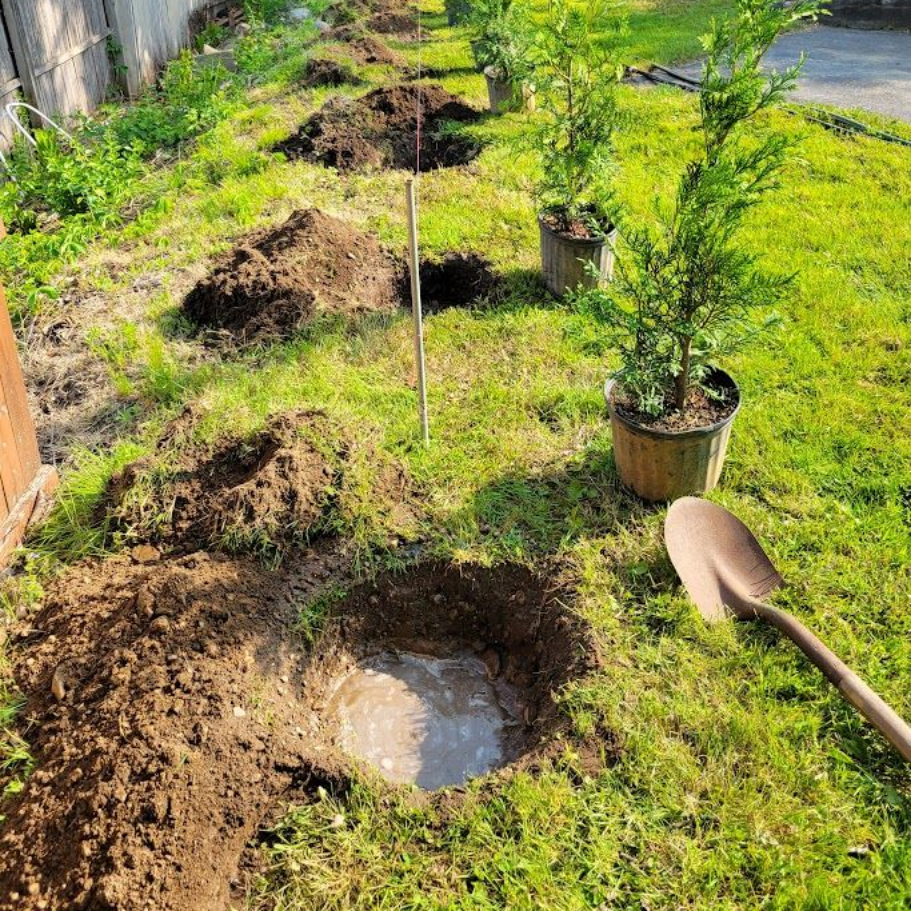
- Dig a hole:
- Peat pot: 12’’ wide and 6’’ deep
- 3 gallon: 18’’ wide and 14’’ deep
- 7 gallon: 24’’ wide and 16’’ deep
- Place the tree, still in the pot, back in the hole. Add loose soil, under the pot, until you can see that the soil inside the pot is level with the top of the hole.
- Remove the potted tree from the hole.
- Fill the hole with water. Letting the water completely absorb into the soil.
- Carefully take the tree out of the pot and loosen the soil around the roots with your hands. (Peat Pots can be planted directly into soil)
- Place the tree in the hole and backfill the soil firmly around the roots.
- Making sure that the tree stays level to the ground around the hole.
- Do not add any soil around the tree trunk above what came in the pot.
- Excess soil can be used to make a ring around the outside width of the hole.
- Fill inside the ring with water.
Continue to water trees 2 to 3 times per week for the first 8 - 12 weeks.
After the initial 8 to 12 weeks, water once a week until trees are established.
Would you like for Farmer Clark to plant your trees instead?
Learn more about installation. Have questions,
check out our FAQs.
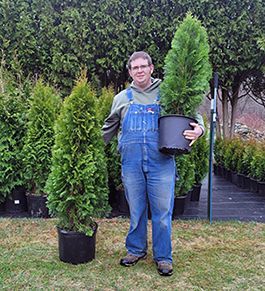
Farmer Clark's Tree Caring Tips
When to Plant
Plant arborvitae in the spring to avoid heat stress and give its roots time to establish.
Where to Plant
Plant arborvitae in moderately moist, well-drained soil in full sun or partial shade. Remove weeds, grass, rocks, and debris.
Arborvitae Care
Heavy snow can break branches, so brush them off after a storm—broken limbs should be pruned off, and the plants may need to be staked upright until they recover.
Fertilizer
If new growth is very sparse or slow, an application of a balanced fertilizer can be applied after the first year of planting. For the amount to use, follow product label instructions.
Pruning Arborvitae
If desired, light pruning in the early spring can help your arborvitae remain neat and foster thicker growth. To do so, trim the leafy parts of the branch, making sure not to cut back to bare wood. Dead or diseased branches should be removed to prevent decay and improve air circulation.
Overwintering - Arborvitae are cold-hardy but can benefit from extra winter care, especially when young. Snow and ice can cause stem breakage. Periods of drought, high wind, and plunging temperatures can cause drying out and browning. Mulch can also keep the roots insulated and retain moisture in the ground.
Dropping Needles
Each year, arborvitae will drop their needles from the plant's interior. It may look like the entire plant is browning from the inside out - this is natural and expected.
Arborvitae are low maintenance, cold hardy, and generally have few, if any, problems with pests and disease.
Browning Leaves in Winter - Arborvitae are winter hardy, and should stay green throughout the year, but they may lose a little of their vibrancy. They are susceptible to browning when the temperatures suddenly plunge or lack water in winter. Keep giving water in the winter if the soil dries out or if there is a lack of rain or snow.
Tree Care FAQs
Which arborvitae variety should I buy for my goal (privacy hedge vs specimen), and which grows fastest?
Green Giant when you have room and want a larger, faster-growing privacy screen. Plan the mature width into your layout so you don’t end up forced to prune too hard later.
What size should I buy (3–4 ft, 5–6 ft, 7–8 ft), and does bigger mean better survival?
If you are interested in planting a Green Giant Arborvitae you should see about 1 foot of growth in the first season. Once established the trees are known to grow 3 to 4 feet per year. We offer affordable trees and the knowledge on how to plant them successfully.
Emerald Green Arborvitaes should grow about 6 inches in the first season. They are slower growing but are known for their compact dense foliage.
How far apart should I space Emerald Green for a hedge?
Spacing depends on how quickly you want a solid screen and how wide you’ll allow the plants to get, but Emerald Green is commonly planted closer for a tighter hedge than larger forms. If you plant too tight, airflow drops and you can end up with more interior dieback and more frequent pruning. We recommend planting Emerald Green Arborvitaes 4ft on center. At first it will look like a lot of space but as the tree grows it will fill in nicely.
How far apart should I space Green Giant for a privacy screen?
Green Giant needs more spacing than Emerald Green because it gets much wider, and tighter spacing can force aggressive pruning later. We recommend planting the Green Giant Arborvitaes 5ft on center. Most of the time they are planted in a straight line. For more of an instant privacy the trees can be planted in a zig-zag pattern.
When is the best time to plant arborvitae (spring vs fall) in my climate?
Arborvitaes are best planted in New England throughout the spring. Late March through the beginning of June. That gives them time to adjust to your soil conditions before winter. Plant in spring or early fall so roots can establish before summer heat or deep winter conditions, and avoid planting right before the ground freezes. If fall planting, keep watering until the ground begins to freeze to reduce winter drying stress.
How often should I water arborvitae after planting, and how do watering needs change once established?
Arborvitaes need to be watered 2 to 3 times per week for the first 8 - 12 weeks.
After the initial 8 to 12 weeks, water once a week until trees are established.
Once the trees are established they don’t need to be watered. By then they have acclimated to your soil conditions.
Can arborvitae be overwatered, and what soil/drainage do they need to avoid “wet feet”?
Planting location is a big factor to consider before planting the trees. If you plan to plant in a low section of your yard where you know water sits. You are going to want to build a berm to plant the trees into. Arborvitaes won't survive if they have wet feet. You will see them start to turn yellow from over watering. For more information please check out Planting Instructions.
Why is my arborvitae turning yellow/brown or drooping, and can it recover?
If your tree is turning colors after planting it is typically due from over or under watering. Please check out Planting Instructions. Dropping / Shedding is a normal occurrence in the fall, winter Injury also causes discoloration. In CT/MA, a common cause is winter injury (drying winds, sun, frozen ground limiting water uptake), which can show up as browning or dieback as plants come out of winter. Drought stress going into winter can raise the risk, so consistent watering into fall matters.
Should I fertilize arborvitae—when, how much, and what type?
We recommend not fertilizing after planting. That gives the tree time to set its roots and adapt to your soil conditions. In your second year you can apply fertilizer to increase growth of your arborvitae. Fertilize arborvitae only if they need it (best confirmed with a soil test), and if you do, apply a slow-release, higher‑nitrogen fertilizer in early spring before new growth starts.
When (and how) should I prune arborvitae, and what happens if I prune too hard/into old wood?
You will not have to consider pruning your arborvitaes for many years. When they get to your desired height you can top them. Then they will use their energy to fill out. If you prune too hard into old wood it will take a long time for the tree to send out a new branch.
How do I protect arborvitae from winter damage (snow load, windburn), and should I wrap them?
Wrapping (or using burlap screens) can help in exposed, windy sites because New England winters can cause drying injury (winter desiccation), often showing up as browning later in winter or early spring. It’s most helpful for new plantings and sites with strong wind and winter sun exposure.
How do I prune arborvitae: do I square them off or let them stay natural?
For a formal hedge, you can shear, but keep the top slightly narrower than the bottom so light reaches lower branches; this helps reduce lower thinning. If you “square off” with a broad top, the bottom can get shaded and lose foliage over time.
Can I top arborvitae to keep them short?
We can special order you trees that fit the mature height you desire.
Heavy topping is generally discouraged because it can create awkward regrowth and often leads to multiple new leaders near the cut point. If you need height control, aim for selective reduction that preserves a natural outline rather than a flat “crew-cut” top.
Why do my arborvitae have multiple tips (multiple leaders), and is it a problem?
Multiple tips often happen when the main leader is damaged from snow/ice, deer, handling or after topping, and the plant responds by pushing several competing leaders. It can be a cosmetic issue, and multiple leaders may be more prone to splitting under snow load than a single trained leader.
What should I do if my arborvitae has multiple leaders?
If you want a single top, pick the strongest, straightest leader and remove or gradually “subordinate” the others so one becomes dominant, reducing the chance of weak forks. Do this with restraint—arborvitae don’t reliably regrow from old bare wood, so avoid cutting deep into leafless interiors.
How do I protect arborvitae from deer in CT/MA?
Deer commonly browse arborvitae including Emerald Green, especially in winter when other food is scarce, so protection may be necessary in many neighborhoods. Physical barriers and repellents are commonly recommended approaches, with fencing generally the most reliable where pressure is high.
What’s the most important care step after planting arborvitae?
Correctly watering your new trees is the most important thing you will need to do after planting. Please follow our Planting Instructions for Watering Timing-
Consistent watering during establishment is key, because drought stress increases vulnerability to browning and winter injury later. Mulch helps conserve moisture, but keep it off the trunk to avoid moisture and rot issues at the base.
how to find arborvitae trees for sale?
Farmer Clark’s team sells fast‑growing privacy arborvitae from their licensed nursery in Hampden, MA and delivers to homes across all of Massachusetts, Connecticut and nearby with expanded delivery available for larger orders throughout New England, including Rhode Island, eastern New York (Albany area), southern Vermont, southern New Hampshire